Waxing, shaving, threading, epilators — we have all tried (and got tired of) them. Laser hair removal remains the only method proven to reduce hair growth long-term, and modern devices have made it safer, faster and effective on a wider range of skin tones than ever before.
How does laser hair removal actually work?
A concentrated beam of light is absorbed by the pigment (melanin) inside your hair follicle. This light energy is converted into heat, which damages the follicle enough to slow or prevent future hair growth. Because the laser targets melanin, it works best on hair that is growing — which is why multiple sessions are needed.
Why do I need multiple sessions?
Hair grows in three phases: active, transitional and resting. The laser only affects hair in the active growth phase — roughly 20 to 30 percent of your hair at any one time. This is why a full course of 6 to 8 sessions, spaced 4 to 6 weeks apart, is standard. Maintenance top-ups once or twice a year keep results long-lasting.
Which areas can be treated?
- Face: upper lip, chin, sideburns, full face
- Body: underarms, full arms, back, chest, stomach
- Legs: half legs, full legs
- Intimate: bikini line, Brazilian, Hollywood
Does it work on all skin tones?
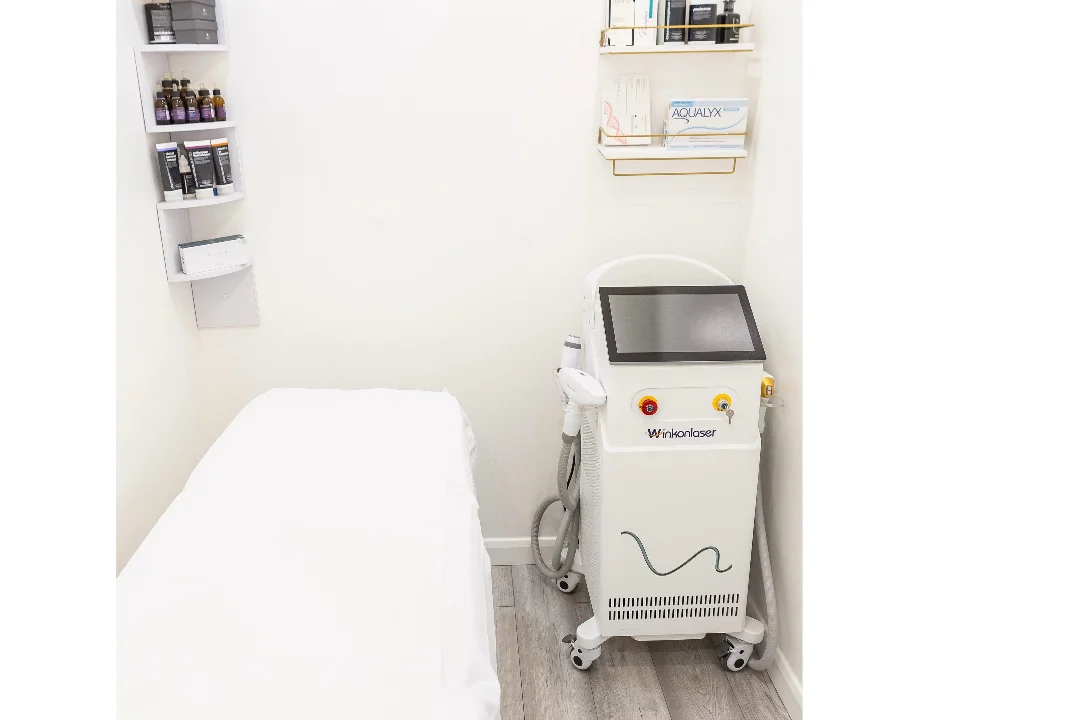
Yes — but the right technology matters. We use diode laser systems designed to safely treat a wide range of skin tones, including darker skin, without pigment changes. During your consultation we assess your Fitzpatrick skin type and adjust settings accordingly. Older IPL devices can struggle with darker skin, which is one reason to choose a clinic with modern, medical-grade equipment.
What about grey, blonde or red hair?
Laser needs pigment to target. Very light blonde, grey or white hair contains little to no melanin, so laser is generally not effective. If you have fine blonde hair in areas like the upper lip, electrolysis or waxing may be more suitable. We will always be honest during your consultation.
Before your appointment
- Shave the area 24 hours before — do not wax or epilate
- Avoid sun exposure and self-tan for 2 weeks
- No active skincare on the area for 3 days
- Come with clean skin (no makeup, deodorant or lotion on the area)
Does it hurt?
Modern diode lasers use cooling technology that makes the treatment surprisingly comfortable. Most clients describe it as a quick warm snap — far less painful than waxing. Sensitive areas like the upper lip or bikini line may feel slightly more intense, but it is always tolerable.
After your session
You can resume most activities straight away, but skip the gym, saunas and hot showers for 24 hours. Some mild redness is normal. Hair will often appear to grow for 1 to 2 weeks after treatment — this is dead hair being pushed out by the skin. Gentle exfoliation helps speed the shedding.
Is it really permanent?
The more accurate term is "permanent reduction." After a full course, most clients see an 85 to 95 percent reduction in hair growth. Some hair may regrow over time due to hormonal changes, which is why occasional maintenance is recommended. Still — compared to a lifetime of shaving or waxing, the time and cost savings are significant.