Anti-wrinkle injections — often referred to generically as "Botox" — are among the most studied and widely used aesthetic treatments in the world. Despite their popularity, there is still a lot of mystery and myth around what they actually do. This guide cuts through the noise.
How do anti-wrinkle injections work?
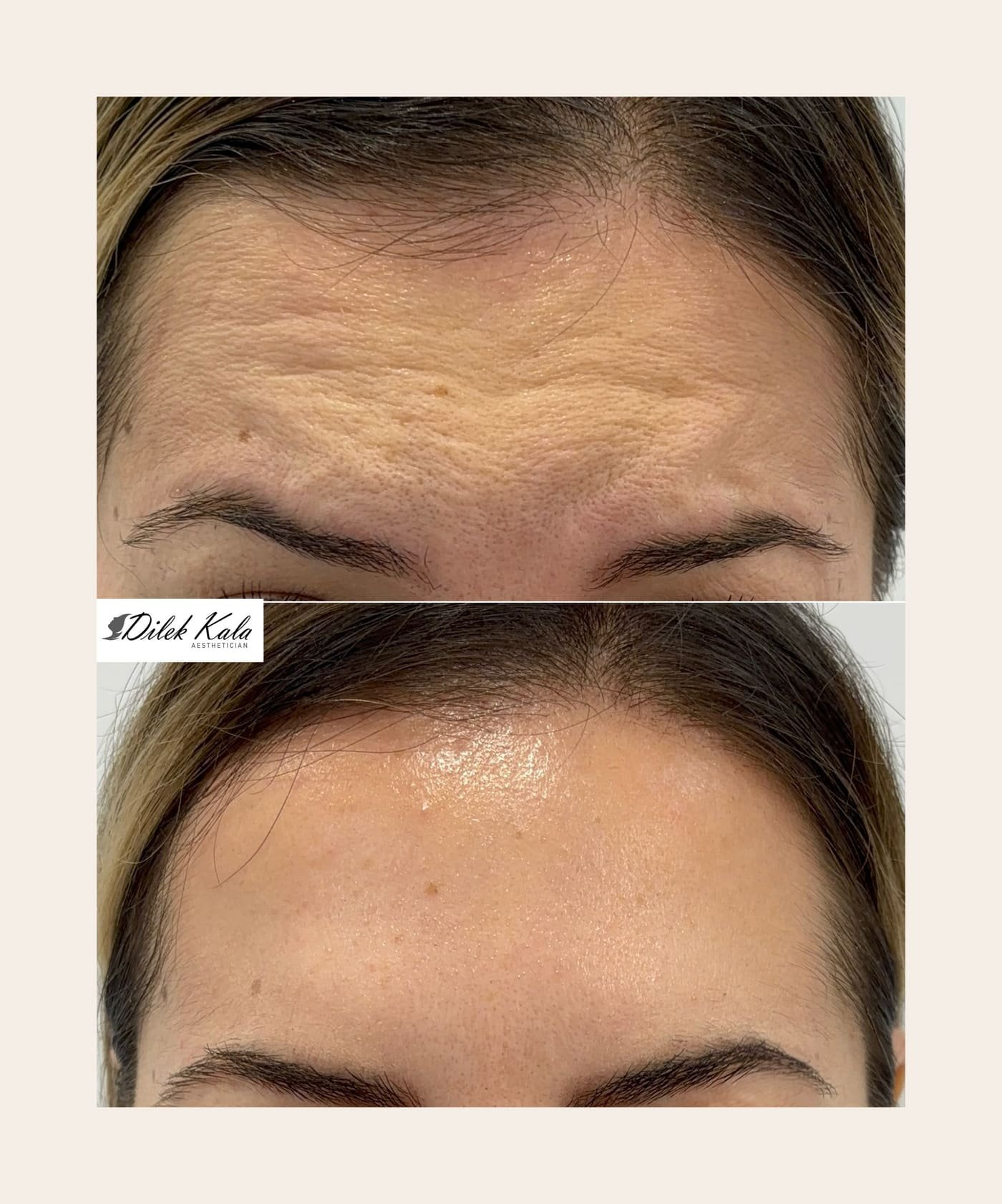
Anti-wrinkle injections contain a purified protein (botulinum toxin type A) that temporarily relaxes the muscles responsible for repetitive facial expressions — frowning, squinting, raising the brows. When those muscles rest, the skin above them smooths out, and the dynamic wrinkles they create soften.
Importantly, anti-wrinkle injections only address wrinkles caused by muscle movement. Lines that appear when your face is completely relaxed (called static wrinkles) are better treated with dermal fillers, skin boosters or collagen-stimulating treatments such as Profhilo.
Common treatment areas
- Forehead lines — horizontal lines that appear when you raise your eyebrows
- Frown lines — the vertical "11" between the eyebrows
- Crow's feet — lines that fan out from the outer corners of the eyes
- Bunny lines — small diagonal lines on either side of the nose
- Masseter (jaw) — reduces a bulky jawline and helps with teeth grinding
- Hyperhidrosis — treats excessive underarm sweating
Does it hurt?
The needle used for anti-wrinkle injections is extremely fine. Most clients describe the sensation as a tiny pinprick. The entire treatment typically takes less than 15 minutes, and no downtime is needed — you can go straight back to work or the school run.
When will you see results?
Results are not instant. The protein takes 3 to 5 days to begin working and reaches its full effect around day 14. We recommend booking your follow-up review two weeks after treatment so we can assess the result and offer a small top-up if needed.
How long does it last?
Most clients enjoy smooth, refreshed results for 3 to 4 months. Over time, with regular treatments, many people find the effect lasts longer because the targeted muscles become less active and the skin has time to recover.
Will I look frozen?
No — not when it is done correctly. Modern dosing aims for a relaxed, rested look, not a motionless face. You should still be able to express emotion naturally; you just won't see the deep creases you saw before. If you have ever thought someone looked "overdone," that is usually a sign of incorrect placement or dosage, not the treatment itself.
When is the best time to start?
There is no single "right" age — it depends on your skin, genetics and how your lines are developing. Many clients in their late twenties and early thirties start with a low dose to prevent deep lines from forming. Others start later, when static wrinkles appear. A consultation is the best way to know what makes sense for you.